
Skip Navigation

Posts
42
Comments
3313
Joined
3 yr. ago

Off-and-on trying out an account over at @tal@oleo.cafe due to scraping bots bogging down lemmy.today to the point of near-unusability.

  •  
            $ wget https://www.itis.gov/downloads/itisMySQLTables.tar.gz
        $ unp -U itisMySQLTables.tar.gz
        $ cd itisMySQL072826
        $ cut -d'|' -f2 longnames|grep -iE '^([^ ]+) \1 \1$'
        Porites porites porites
        Volva volva volva
        Modiolus modiolus modiolus
        Quadrula quadrula quadrula
        Arcinella arcinella arcinella
        Echiurus echiurus echiurus
        Sprattus sprattus sprattus
        Lepadogaster lepadogaster lepadogaster
        Pungitius pungitius pungitius
        Caretta caretta caretta
        Puffinus puffinus puffinus
        Sula sula sula
        Anhinga anhinga anhinga
        Nycticorax nycticorax nycticorax
        Lagopus lagopus lagopus
        Perdix perdix perdix
        Limosa limosa limosa
        Alle alle alle
        Apus apus apus
        Riparia riparia riparia
        Troglodytes troglodytes troglodytes
        Cardinalis cardinalis cardinalis
        Coccothraustes coccothraustes coccothraustes
        Pyrrhula pyrrhula pyrrhula
        Carduelis carduelis carduelis
        Pica pica pica
        Oenanthe oenanthe oenanthe
        Ciconia ciconia ciconia
        Bison bison bison
        Clelia clelia clelia
        Phocoena phocoena phocoena
        Gulo gulo gulo
        Hyaena hyaena hyaena
        Nasua nasua nasua
        Belone belone belone
        Lerwa lerwa lerwa
        Francolinus francolinus francolinus
        Coturnix coturnix coturnix
        Gallus gallus gallus
        Crossoptilon crossoptilon crossoptilon
        Zungaro zungaro zungaro
        Bubo bubo bubo
        Amazilia amazilia amazilia
        Coeligena coeligena coeligena
        Porphyrio porphyrio porphyrio
        Grus grus grus
        Manacus manacus manacus
        Pipra pipra pipra
        Suiriri suiriri suiriri
        Anser anser anser
        Pauxi pauxi pauxi
        Gallinago gallinago gallinago
        Caracal caracal caracal
        Lynx lynx lynx
        Genetta genetta genetta
        Vulpes vulpes vulpes
        Lutra lutra lutra
        Martes martes martes
        Meles meles meles
        Mephitis mephitis mephitis
        Icterus icterus icterus
        Curaeus curaeus curaeus
        Melanodera melanodera melanodera
        Diuca diuca diuca
        Nyctelius nyctelius nyctelius
        Buteo buteo buteo
        Cochlearius cochlearius cochlearius
        Jacana jacana jacana
        Milvus milvus milvus
        Chinchilla chinchilla chinchilla
        Tibicen tibicen tibicen
        Avicularia avicularia avicularia
        Alces alces alces
        Capreolus capreolus capreolus
        Dama dama dama
        Gazella gazella gazella
        Oreotragus oreotragus oreotragus
        Rupicapra rupicapra rupicapra
        Redunca redunca redunca
        Quelea quelea quelea
        Regulus regulus regulus
        Tchagra tchagra tchagra
        Phoenicurus phoenicurus phoenicurus
        Petronia petronia petronia
        Cinclus cinclus cinclus
        Pyrrhocorax pyrrhocorax pyrrhocorax
        Amandava amandava amandava
        Petaurista petaurista petaurista
        Marmota marmota marmota
        Hoolock hoolock hoolock
        Gorilla gorilla gorilla
        Indri indri indri
        Pithecia pithecia pithecia
        Saccolaimus saccolaimus saccolaimus
        Molossus molossus molossus
        Pipistrellus pipistrellus pipistrellus
        Myotis myotis myotis
        Chitra chitra chitra
        Microchaetus microchaetus microchaetus
        Chloris chloris chloris
        Giraffa giraffa giraffa
        Basiliscus basiliscus basiliscus
        Cerastes cerastes cerastes
        Natrix natrix natrix
        Astacus astacus astacus
        Colius colius colius
        Chalcides chalcides chalcides
        Scincus scincus scincus
        Schoeniclus schoeniclus schoeniclus
        Radjah radjah radjah
        Himantopus himantopus himantopus
        Antigone antigone antigone
        Pyrope pyrope pyrope
        Curruca curruca curruca
        Bufo bufo bufo
        Vicugna vicugna vicugna
        Erythrogenys erythrogenys erythrogenys
        $
      
  • Not that I have anything against local use---I do my stuff locally---but people running local models will very probably greatly increase demand for memory relative to cloud-based AI compute (and it's why I think that in the near term, most AI compute stuff is gonna be in the cloud, because we don't have the memory to do everything locally).

    If you run in the cloud, the hardware is shared. When one person isn't using it, another can be. That can lead to high rates of capacity utilization, approaching 100%.

    If I have local AI compute hardware, if I'm not using it, it's idle. If 1% of the time, I have it crunching something for me, then I'm only getting 1% capacity utilization of that hardware. That means that to provide the same level of compute capability to everyone for local use, I need 100 times as much hardware.

    AI cloud companies have purchased more memory than the rest of the world is buying.

    If we did everything locally, we'd need a hundred times more memory than what the cloud AI companies are picking up.

    We couldn't do that without far more memory production capacity. Even if someone started on a buildout of that scale today, a new memory factory takes 4--5 years to get into production.

  • I mean, owls typically eat small birds too, just like cats.

  • I mean, you're talking about Reddit, which is a brand, in this comment.

    Like, people talk about things, and a lot of things have brands.

  • Gorgon Halo, IIRC, goes up to a unified 192GB.

    And while it depends on application, I generally agree that amount of memory is the most important factor. I started out with a 24GB RX 7950 XTX and then picked up a 128GB Framework Desktop. The larger amount of memory on the Framework is just a lot more useful than the greater bandwidth on the 7950, gives a lot more flexibility. I was always able to find useful things to do with more memory and could use more. For LLMs, more context, larger models, less quantitization. For image diffusion models, larger models, higher native resolutions without tradeoffs like having an upscaling pass, batch passes.

    You can see why the cloud AI companies are hell-bent on getting all the memory that they can get their paws on.

  • When there is a split, the Vice President breaks the tie.

    But more generally, that's an intended design feature. The Senate (power is a function of the number of states) is where the states are represented, the House of Representatives (power is a function of number of people) where the people are.

    Switzerland is another federation that has a bicameral structure with a legislative house that represents the states.

    Australia's a federation that has has both legislative houses allocated based on number of states.

  • When I went through school, I did both at various points. Sometimes I'd buy lunch in the cafeteria. Sometimes I'd take a bag lunch.

    The cafeteria can do hot food, which you can't bring. But a bag lunch lets you choose options that aren't served in the cafeteria.

    I mean, honestly, same subsequent to education, at work. People might bring a lunch, or might eat commercially-prepared food. Not really a universal standard.

  • You're not wrong, but honestly, I suspect that some Goo-Gone or similar would knock out leftover adhesive.

    I have seen people recommend that shiny aluminum-backed tape as being very opaque. Dunno what the adhesive is like on that.

  • M-Discs are also useful as very long term archival storage.

    https://en.wikipedia.org/wiki/M-DISC

    In 2022, the NIST Interagency Report NIST IR 8387[25] listed the M-Disc as an acceptable archival format rated for 100+ years, citing the aforementioned 2009 and 2012 tests by the US Department of Defense and French National Laboratory of Metrology and Testing as sources.

  • Sure. Everyone would prefer to have a monopoly that they control, given the option (though to avoid monopolies everywhere other than that). One generally doesn't get the option to exclude other parties from competing with themselves, though.

    If Delta or any other airline had the option, they'd rather be the only airline. But...here we are.

  • Not really a WWI expert, but I believe that you are correct that the big factor was Germany running out of manpower.

    There were also technological advances, like the rolling barrage that moved immediately in front of an advance to suppress defenders. Or the early tank. But I don't think that these fundamentally changed the situation. They alome wouldn't have broken a static situation.

    searches

    Wikipedia apparently calls it a "creeping barrage":

    https://en.wikipedia.org/wiki/Barrage_(artillery)

    A report said "Experience has shown that it is far better to risk a few casualties from an occasional short round from our own artillery than to suffer the many casualties which occur when the bombardment is not closely followed up".[21] A creeping barrage was essential to the success of the Canadian Expeditionary Force in the capture of Vimy Ridge in April, 1917. The creeping barrage was used during the action of Tell 'Asur on 12 March 1918 in the Sinai and Palestine Campaign.[22] Six months later, it was used with devastating effect during the Battle of Megiddo (1918) when 18-pdr and Royal Horse Artillery formed a creeping barrage which fired in front of the advancing infantry up to their extreme range while 4.5-inch howitzers fired beyond the barrage, while heavy artillery were employed in counter battery work.[23] The creeping barrage moved at a rate of between 50 yards (46 m), 75 yards (69 m) and 100 yards (91 m) per minute.[24]

    https://en.wikipedia.org/wiki/Tanks_in_World_War_I

    The development of tanks in World War I was a response to the stalemate that developed on the Western Front. Although vehicles that incorporated the basic principles of the tank (armour, firepower, and all-terrain mobility) had been projected in the decade or so before the War, it was the alarmingly heavy casualties of the start of its trench warfare that stimulated development.[1][2] Research took place in both Great Britain and France, with Germany only belatedly following the Allies' lead.

    Fuller's Plan 1919, involving massive use of tanks for an offensive, was never used because the blockade of Germany and the entry of the US brought an end to the war.

    I think that someone could argue that tanks were becoming a more important factor in late WWI facilitating the offensive, but they weren't yet a major factor.

    You could argue that air power, which was also emerging, would help the offensive, but that was even further out from becoming a major factor.

    I think that it's fair to say that the machine gun, barbed wire, and the trench (maybe also the land mine, though I don't recall seeing that normally listed with the above three) favored the defensive, and that over time, other factors would come to the fore that would favor the offensive. You could say that those factors were becoming more prominent in late WWI. I don't think that one could say that those were the dominant factors in ending the war, though.

    That is to say, the only defense against the new weaponry was to dig trenches, and the only way to capture trenches was to throw a few thousand men at them, at which point, you may have gained a few hundred yards.

    The thing about trench warfare that makes it potent as a defensive measure isn't the idea that no trenches can ever be captured. It's that it slows and limits any offensive to the point that the other side cannot perform a "breakthrough", to both penetrate enemy lines and then be able to greatly exploit that situation. https://en.wikipedia.org/wiki/Breakthrough_(military)

    A breakthrough occurs when an offensive force has broken or penetrated an opponent's defensive line, and rapidly exploits the gap.[1]

    Usually, large force is employed on a relatively small portion of the front to achieve this. While the line may have held for a long while prior to the breakthrough, the breakthrough happens suddenly when the pressure on the defender causes him to "snap".

    As the first defensive unit breaks, the adjacent units suffer adverse results from this (spreading panic, additional defensive angles, threat to supply lines). Since they were already pressured, this leads them to "snap" as well, causing a domino-like collapse of the defensive system. The defensive force thus evaporates at the breakthrough point, letting the attacker to rapidly move troops into the gap, exploiting the breakthrough in width (by attacking enemy units at the edge of the breakthrough, so widening it), in depth (advancing into enemy territory towards strategic objectives), or a combination of both.

    Germany achieved a breakthrough against French forces in WWII---they penetrated French lines and were able to, from that point, conduct a sustained offensive that led to major gains, wirh France unable to stabilize the front.

    That's the kind of thing you'd need to be able to consistently do against trench fortifications for the trenches not to be useful. If a defender can slow an advance enough that they can just dig more trenches or limit an attackers gains to a small amount and then quickly counterattack and retake them, the trenches retain their value.

    that credits light machine gun units (with ample supplies of grenades) for breaking the stalemate.

    I think that that tactic of having more firepower from light machine guns was tried. I don't think that it could be said to have defeated the use of trench fortifications.

    https://en.wikipedia.org/wiki/Marching_fire

    Marching fire, also known as walking fire, is a military tactic—a form of suppressive fire used during an infantry assault or combined arms assault. Advancing units fire their weapons without stopping to aim, in an attempt to pin down enemy defenders. Marching fire usually ends with an infantry charge to engage the enemy in close combat. The tactic requires ample ammunition and rapid-fire weapons.

    The modern form of marching fire evolved in the early 20th century from a French Army infantry assault concept which suggested the use of suppressive fire from a light machine gun carried by one man—the Chauchat automatic rifle. The tactic was employed to a limited degree in World War I then further codified with the introduction of the M1918 Browning Automatic Rifle and described in U.S. small unit infantry tactics manuals in the early 1920s.

    In 1903, French military theorists noticed that the machine guns of the day, heavy and relatively immobile, were of little use in infantry assaults. They determined that "the machine gun must learn to walk".[3] A marching fire tactic (French: feu de marche) was expected to involve incidental suppressive fire, with the advancing troops considered a deadlier threat than the unaimed bullets, causing the enemy to fall back.

  • The problem here is that it's also going to make your pricing uncompetitive.

    You can convert consumer surplus to supplier surplus by using price discrimination.

    https://en.wikipedia.org/wiki/Economic_surplus

    • Consumer surplus, or consumers' surplus, is the monetary gain obtained by consumers because they are able to purchase a product for a price that is less than the highest price that they would be willing to pay.
    • Producer surplus, or producers' surplus, is the amount that producers benefit by selling at a market price that is higher than the least that they would be willing to sell for; this is roughly equal to profit (since producers are not normally willing to sell at a loss and are normally indifferent to selling at a break-even price).[1][2]

    https://en.wikipedia.org/wiki/Price_discrimination

    Price discrimination, known also by several other names, is a microeconomic pricing strategy whereby identical or largely similar goods or services are sold at different prices by the same provider to different buyers, based on which market segment they are perceived to be part of.[1][2][3] Price discrimination is distinguished from product differentiation by the difference in production cost for the differently priced products involved in the latter strategy.[3] Price discrimination essentially relies on the variation in customers' willingness to pay[2][3][4] and in the elasticity of their demand. For price discrimination to succeed, a seller must have market power, such as a dominant market share, product uniqueness, sole pricing power, etc.[5]

    But in a competitive market, normally, that won't work, because you require monopoly power to make it work.

    https://en.wikipedia.org/wiki/Monopoly

    A monopoly (from Greek μόνος, mónos, 'single, alone' and πωλεῖν, pōleîn, 'to sell') is a market in which one person or company is the only supplier of a particular good or service.[1] A monopoly is characterized by a lack of economic competition to produce a particular thing, a lack of viable substitute goods, and the possibility of a high monopoly price well above the seller's marginal cost that leads to a high monopoly profit.[2]

    • Price discrimination: A monopolist can change the price or quantity of the product. They sell higher quantities at a lower price in a very elastic market, and sell lower quantities at a higher price in a less elastic market.

    And the airline industry---at least in the US, and not saying that that is the case everywhere in the world---is a competitive one.

    Warren Buffet has been a pretty prominent voice critical of airlines in the US as an industry; they aren't very profitable.

    searches

    https://jimmysjournal.substack.com/p/why-buffett-hates-airlines-a-case

    For decades, Warren Buffett’s distaste for airline stocks has puzzled many investors.

    How could a business so essential to global commerce, tourism, and modern life be so unattractive to one of the world’s most celebrated capital allocators?

    The airline industry is, unfortunately, a textbook example of a structurally unattractive sector:

    • Rivalry Among Existing Competitors: Intense. Price wars are common. Differentiation is minimal. Customers view seats as commodities, and loyalty programs offer diminishing returns.
    • Threat of New Entrants: Moderate to high. While aircraft procurement and regulatory hurdles present barriers, the proliferation of low-cost carriers has shown that entry is possible - often with disruptive effects.
    • Bargaining Power of Suppliers: High. Aircraft and engine manufacturers (Airbus, Boeing, GE, Rolls-Royce) operate as oligopolies. Airports and labor unions also exert significant leverage.
    • Bargaining Power of Buyers: High. With near-zero switching costs, passengers chase the lowest fare. Online aggregators have further commoditized the booking process.
    • Threat of Substitutes: Medium. Alternatives like high-speed rail (Europe, China) or videoconferencing (post-COVID) are becoming more viable.

    Each of these forces squeezes margins. Together, they form a gauntlet that makes sustainable value creation exceedingly rare.

    The airline industry has a long and notorious history of earning ROICs at or below WACC.

    In other words, despite growing revenues and essential services, the industry has historically destroyed shareholder value. From 1963 to 2023, U.S. airlines rarely posted positive ROIC-WACC spreads. This isn’t just a cyclical issue - it’s structural.

    Buffett never bet against airplanes - he bet against the economics of the airline business.

    And over the long run, he was right.

    Delta might say "okay, Person X has the ability and willingness to pay more for a product that I offer, so I'll charge more".

    The problem is that that makes it very easy for the airline down the street to take their business by simply not charging that much.

    And while there is some overhead associated with comparing prices, and customers will place some value on the time they spend comparing prices, there are a number of well-established existing services to do price comparisons between airlines, like Travelocity and Orbitz, which make this pretty quick and easy.

    Like, I don't think that the limiting factor on an airline doing personalized pricing is likely a lack of having a model that can sufficiently-accurately predict the price an individual is willing to pay, which is what AI or other computer modeling would provide. Rather, it's the presence of a competitive market.

  • The destruction of the book is done to mitigate some copyright concerns. There will be a fairly small number of large-scale projects like this, and each only needs one copy of a given book, so outside of maybe very rare books, the impact is going to be pretty negligible on availability --- like someone buying one copy of that book.

  • I finally started putting white labels over a bunch of these the other day. It had just gotten out of hand. A Minisforum mini-PC with a blindingly bright power light was the breaking point --- that took three layers of label to bring the brightness down to a reasonable level.

    I've also started actively trying to get devices that don't have power or status lights, where possible. I don't really need a USB hub with status lights. Used to be just PC components with unnecessary RGB bits that I avoided.

  • There was a point in the past when society was concerned about people wasting their time on television instead of on social media or short-form video or whatever's du jour now.

  • If that's actually their problem, they could easily just play a small amount of silence before a video's content. They don't need to be constantly tying up an audio stream.

  • Funnily enough, Microsoft built WSL so developers could use Linux without leaving Windows. Instead, it turned a growing number of Windows PCs into functional Linux development machines, with Windows serving as little more than the launcher.

    I mean, I get using Windows if you're actually doing Windows development work, but if not, I'd just put Linux proper on the thing.

    The appeal for developers is that even if their employer issues a Windows laptop, and even when their development stack expects Linux, WSL removes the need to dual-boot.

    With WSL, they don’t have to fight their employer’s hardware policy to get it.

    Any employer that is employing someone to do Linux development work and takes issue with them having a Linux box to do dev work isn't a place that I'd want to bother to work.

  • only thing

    Cygwin?

  • Searching, I can see some other people asking about "LEDH1" connectors, so I'd guess that it's probably something Dell proprietary. My own past experience has been that Dell doesn't always use standard connectors.

    You can probably trace out the leads if you still have the old case and connector. You do that, get a pinout, you can probably rig up your own cable from the old one and splicing wires.

    I wouldn't hassle with it myself, would just get a different motherboard, but if the time tradeoff is worth it to you...shrugs

  • Technology @lemmy.world

    SODIMM-to-DIMM adapters offer a workaround for DDR5 price hikes

    videocardz.com /newz/sodimm-to-dimm-adapters-offer-a-workaround-for-ddr5-price-hikes
  • politics @lemmy.world

    Two More Heritage Foundation Trustees Resign Over Support for Tucker Carlson

    www.nytimes.com /2025/12/16/us/politics/heritage-foundation-trustees-resign-tucker-carlson.html
  • Selfhosted @lemmy.world

    Framework stops selling separate DDR5 RAM modules to fight scalpers

    www.pcworld.com /article/2988171/framework-stops-selling-separate-ddr5-ram-modules-to-fight-scalpers.html
  • Technology @lemmy.world

    AI country singer Breaking Rust tops Billboard with ‘Walk My Walk’

    www.sfchronicle.com /entertainment/article/ai-country-breaking-rust-21156784.php
  • commandline @programming.dev

    nmcli and nmtui for WiFi control from the command line

  • politics @lemmy.world

    Understanding the Coming Premium Apocalypse

    paulkrugman.substack.com /p/understanding-the-coming-premium
  • News @lemmy.world

    Elon Musk's xAI sues Apple and OpenAI over AI competition, App Store rankings

    www.reuters.com /legal/litigation/elon-musks-xai-sues-apple-openai-over-ai-competition-app-store-rankings-2025-08-25/
  • Privacy @lemmy.world

    Steam Game Loaded With Malware That Targets Crypto Wallets, Harvests Personal Info - Decrypt

    decrypt.co /332109/steam-game-loaded-malware-crypto-wallets-harvests-personal-infor
  • United Kingdom @feddit.uk

    Jury-free trials recommended to save courts from 'collapse'

    www.bbc.com /news/articles/cm2m808kml0o
  • Technology @lemmy.world

    Windows 11 finally overtakes Windows 10

    www.theregister.com /2025/07/04/windows_11_market_share/
  • Comic Strips @lemmy.world

    Puck: Uncle Sam's dream of conquest and carnage - caused by reading the Jingo newspapers

  • Comic Strips @lemmy.world

    Puck: The Wall Street rumor-monger

  • Comic Strips @lemmy.world

    Puck: Set in their ways

  • Comic Strips @lemmy.world

    Puck: The fullest dinner pail

  • Comic Strips @lemmy.world

    Puck: As the tariff-war must end

  • News @lemmy.world

    Americans cut back sharply on their spending last month amid tariffs

    www.cnn.com /2025/06/17/economy/us-retail-sales-may
  • You Should Know @lemmy.world

    YSK: db0@lemmy.dbzer0.com set up a AI image generator bot on the Threadiverse for anyone here to freely use

  • World News @lemmy.world

    Mount Etna eruption live: Huge volcano eruption in Italy sends tourists fleeing
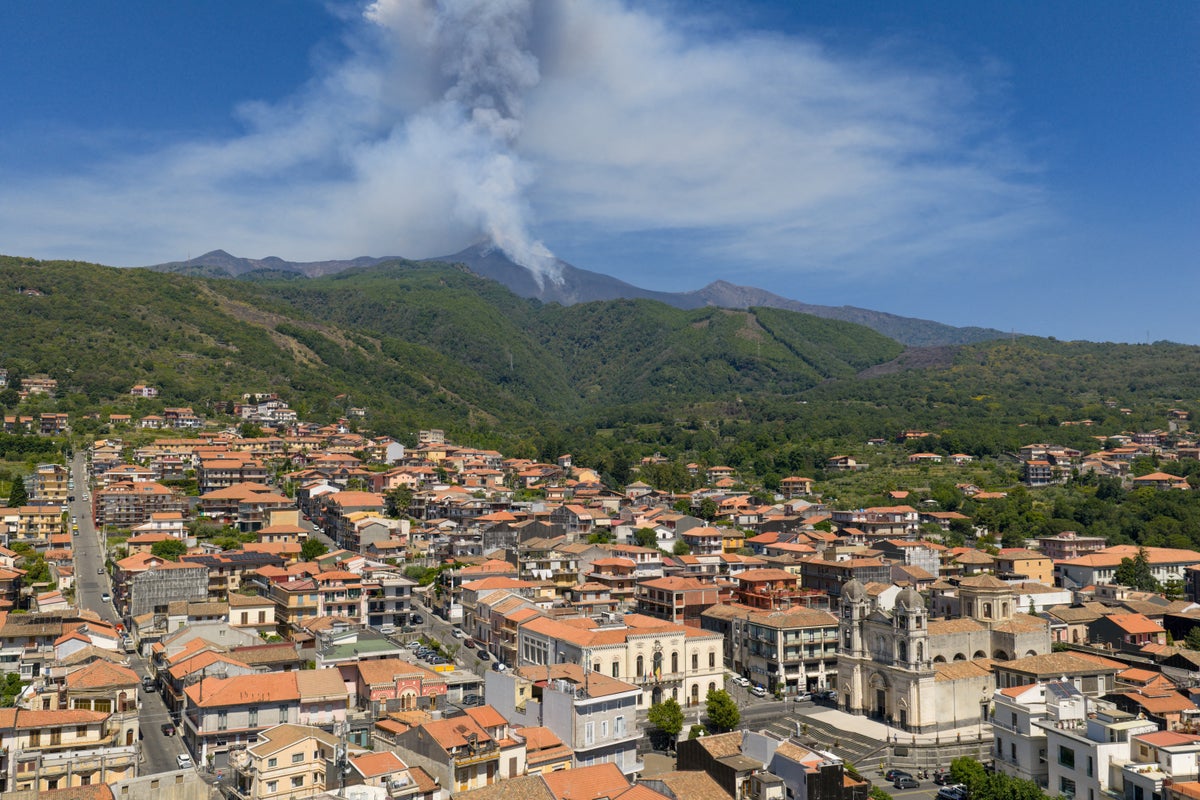
    www.independent.co.uk /news/world/europe/mount-etna-eruption-volcano-smoke-lava-live-updates-b2761911.html
  • Europe @feddit.org

    Musk says he hopes for 'zero tariffs' between US and Europe

    www.reuters.com /world/europe/musk-says-he-hopes-zero-tariffs-between-us-europe-2025-04-05/
  • Privacy @lemmy.world

    I believe that the "Nicole" images being sent to Threadiverse users may be intending to deanonymize accounts