Skip Navigation

InitialsDiceBearhttps://github.com/dicebear/dicebearhttps://creativecommons.org/publicdomain/zero/1.0/„Initials” (https://github.com/dicebear/dicebear) by „DiceBear”, licensed under „CC0 1.0” (https://creativecommons.org/publicdomain/zero/1.0/)F
Posts
2
Comments
1236
Joined
3 yr. ago

  • There's a "proper" version of this hack called early oom. I haven't used it though and now that I look at it it seems like it uses the same completely broken "guess which process to kill, who cares if it's init" system that the normal oom killer uses so your solution sounds better.

    Is it so hard to just pause the system and ask the user which app to kill?
  • Interesting, so that's sort of customising the image somehow? Does it use an overlay FS or something?

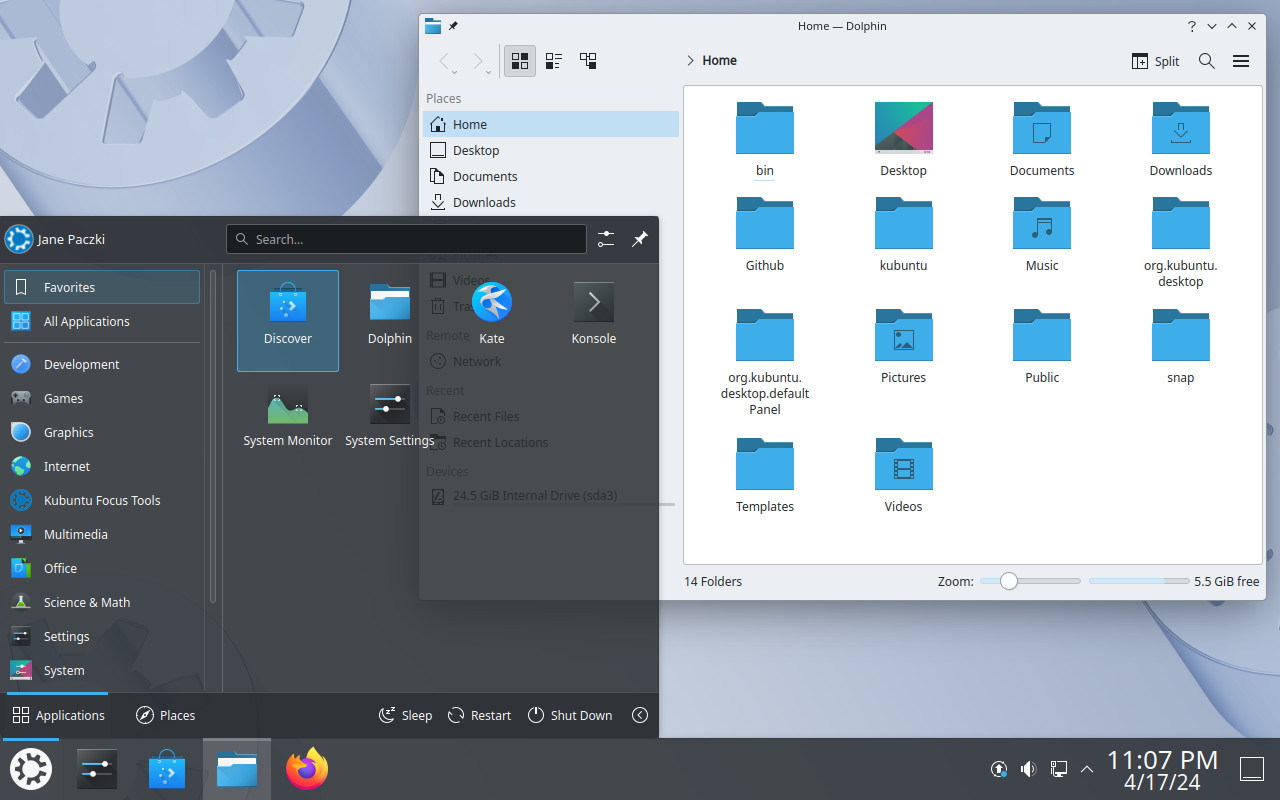
  • Hmmm I guess this kind of makes sense - most distros push Gnome above KDE (probably because it doesn't look like this - where's Tantacrul when you need him?). On the other hand, there's already Kubuntu...

    I'm a bit skeptical about immutable distros too. What if I want to install a package that isn't already installed and isn't available as a Flatpak/Snap? Seems like it's going to run in similar issues to everything else that tries to wade upstream against the bad decisions of the existing Linux packaging zeitgeist, e.g. how Nix has to install everything in one root-owned directory because nobody cares about portable installation.

  • That's cool, but in my experience if you get to the OOM killer then 80% of the time it's too late and your system is basically dead. My laptop hard reboots most of the time when this happens.

    Hopefully it works with the early-OOM hacks.

  • I have 32 GB but it's not enough. Try opening 8 instances of VSCode, Firefox and Chrome with a few dozen tabs. Unfortunately my laptop doesn't support 64 GB of RAM.

  • I have never seen a single C++ codebase do that. It helps but it's not a practical full solution.

  • Interesting how they build a community starting with rebasing on top of Gitea, and then hard-forked later. Probably a good blueprint for forking.

    GPL move also seems like a good idea - it reduces the chance of needing yet another fork.

    Can they get whoever came up with the excellent name "Codeberg" to fix the terrible name "Forgejo" though? It's not quite as bad a name as GIMP or Got, but still...

    Also i absolutely hate how they talk about moderation. You can't just say "someone was banned for some actions". That doesn't inspire confidence at all! Imagine if the police were always saying "one of your peers was sent to prison for a crime" and refused to say who or what they did. That's communist Russia territory...

    They claim they can't say because of the right to be forgotten but that's not what the right to be forgotten means.

  • ... in one benchmark.

  • They've been doing that for about the last 6 releases. I wish they'd fix some of the long-standing annoying bugs like the fact that you can't respect .gitignore and search in a subdirectory at the same time. Or the fact that you can't stage a submodule unless you also have that submodule open.

    Or how about a less annoying way to configure Run/Debug than launch.json?

    Still, can't complain. It's mostly free and still very good overall. I'll definitely be watching Zed... but maybe not too closely until it supports opening large files.

  • Yes, but I was talking about Linux in general. I'm pretty sure Gnome at least has commercial backing.

    And Linux advocate never say "don't use Linux; it isn't a commercial product so it isn't as good as Windows" do they? They say "you're an idiot for using Windows; Linux is better".

  • GPU reset recovery

    Woah catching up to Windows 18 years ago! :D

    Tbf I did not think we would ever see this feature. What next, secure login prompts ("press ctrl-alt-del to login in", which admittedly Windows seems to have dropped)?

  • Yes but they frequently ask for optional donations too. Are you a parasite for not donating?

  • I think he meant the idea of shaming companies for not donating to things.

  • I don't think you can blame them for this. How many resources do you use without voluntarily paying extra above your legal requirements? Do you donate every time you go to free libraries, museums, parks, cathedrals, etc? I certainly don't and I don't think that makes me "the parasite class".

  • I think once things get established the people in charge see any attempt to change it as some kind of personal insult, so they just go into defence mode. You see the same thing e.g. with Python - for literally decades they've denied that performance matters and it's really only recently that that has changed.

    I think it will only get worse for C++ because the people who understand this stuff have mostly given up on C++.

  • Yeah I mean it's definitely a reference volume of last resort, rather than a tutorial you would read cover to cover. Clearly a genius but he explains things as if you already understand them, and can also read his mind.

    That said, for a lot of the content the only alternative is research papers and they are even less accessible. I definitely would only use it if I couldn't find answers anywhere else though.

  • This is about Spectre, not about buggy hardware implementations.

    Spectre is a fundamental flaw in speculative execution that means it can leak information, so it's a security vulnerability. Apparently Intel has been imposing draconian requirements on software to work around the issue rather than fixing it in hardware, which is obviously what they should do, but is not at all trivial.

  • Unless the binary size difference is insane, who would say "oh well we were going to pick the library that wasn't riddled with security issues but we decided to save 2MB instead, hope that makes you feel better about your $12m cybersecurity fine!".